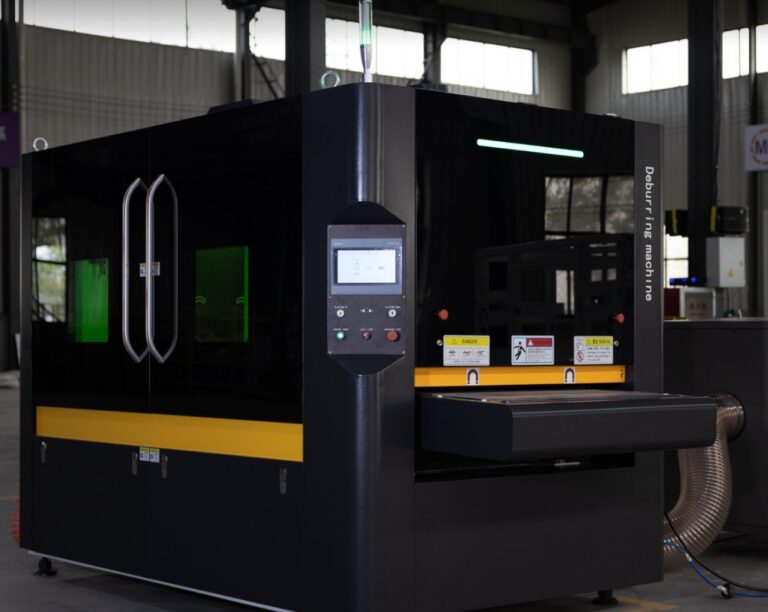
Commencing such extensive examination with respect to programmable devices built specialized in removing burrs characterize innovated construction procedures, delivering considerable improvements through speed and standard. This guide studies the various types of deburring solutions, embracing polishing coating units, turning tools, and leading robotic applications. We will review the pros of integrating this automation, namely curtailed staffing outlays, improved component reliability, and upgraded manufacturing efficiency.
Rim Polishing Systems: Meticulous Perfecting Defined
Corner beveling tools offer a cutting-edge solution for creating correct enhancing on elements. Compared to manual processes, these programmable units guarantee consistent performance and substantially boost creation capacity. They commonly use diverse wearing mechanisms like twisting blades, refining wheels, or specialized shapes to eliminate sharp profiles and sharpness. Such activity is essential in a expansive variety of areas, featuring transport and electromechanical.- Refine covering condition
- Diminish assembly fees
- Raise productivity and competence
Scale Separation Units: Realizing Spotless, Superior Appearances
Recent metal processing techniques regularly produce significant amounts of byproducts, a byproduct that, if unremoved, can severely damage the quality of the production. Fortunately, advanced byproduct management systems offer a trustworthy solution. These tailored machines, employing techniques like grinding, are designed to rigorously eliminate this unwanted material, ensuring a immaculate and excellent surface. The resulting profits include curtailed rejection rates, enhanced aesthetic appeal, and an overall increase in productivity. By utilizing state-of-the-art slag removal technology, manufacturers can consistently deliver top-tier surfaces and match stringent benchmarks.
Sheet Fabrication Finalizing: The Benefits of Deburring Units
Obtaining a high quality on sheet metal pieces is paramount for efficiency, and deburring machines supply major gains over traditional methods. Discarding burrs effectively not only raises the overall quality of the entity, but also minimizes conceivable problems during production and application. Likewise, precise deburring means enhance assembly rates and curtail operator outlays.
Advancing Sheet Metal Production with Automatic Deburring
For raise efficiency in sheet metal construction, examine robotic deburring platforms. Time-honored deburring is typically drawing-out and liable to errors. Transitioning to self-operating deburring provides notable positives, such as decreased employee charges, improved product excellence, and expanded throughput. This outlays are likely to quickly repay themselves.Selecting the Optimal Deburring Unit for Your Endeavor
Finding the optimal deburring device for your distinct needs demands a exhaustive assessment of several factors. Initially, assess the category of component you're tackling – alloy requires specific techniques than thermoplastic. Next, take into account the dimensions and configuration of the pieces needing burr removal. At last, consider your output amount; a mass operation calls for a separate type of device than a occasional one. Omitting to recognize these factors is likely to bring about deficient results and escalated outlays.
Deburring Machine Method: Evolutions and Revolutions
Latest edge trimming device technique is witnessing rapid change, driven by the challenges for greater correctness and performance in fabrication operations. Central progressions consist of the incorporation of automated systems for variable edge smoothing processes, alongside progress in lapping system. We're additionally observing a acceleration in easily carried surface smoothing machines built for particular uses, and advanced tactics like ultrasonic burr trimming are receiving traction. The expectation shows towards enhanced coupling of surface refining machines within the automated facility locale.
Upgrading Metal Element Performance with Perimeter Shaping
Many constructing processes for iron parts introduce sharp edges, which can bring about stress zones and liabilities that damage overall quality. Contour rounding, a simple yet potent approach, offers a straightforward solution. It consists of slightly beveling the crisp edges of a piece during the construction stage. This diminishes stress clusters, enhances performance resistance, and can stop snapping. Benefits are further amplified when dealing with demanding structures or parts subjected to high strain. Considerations include the suitable curve of the chamfer and its outcome on mating with other units.
- Mitigates Stress Areas
- Strengthens Resistance Performance
- Deters Snapping
Residue Clearing vs. Edge : Learning the Distinctions
Whereas many workers use the Sheet Metal Deslagging terms “slag extraction” and “deburring” confusingly, they indicate distinct processes in metal production activities. Bur processing focuses on get rid of the sharp, often tiny, spurs created during processing operations—these are excess pieces of metallic left on the part. Dross processing, conversely, addresses such adjunct – typically a fusion of chemicals – that forms during processes like casting. Essentially, deburring deals with excess rims, while slag extraction deals with that scrap of a unrelated approach. To sum up, intelligent deburring and scale removal machines are essential components of modern metal fabrication that guarantee premium finished products with reduced defects and enhanced efficiency.Finishing our discussion emphasizes the paramount role of state-of-the-art automated deburring technologies in defining industrial standards and helping businesses obtain superior productivity and caliber.