Embarking
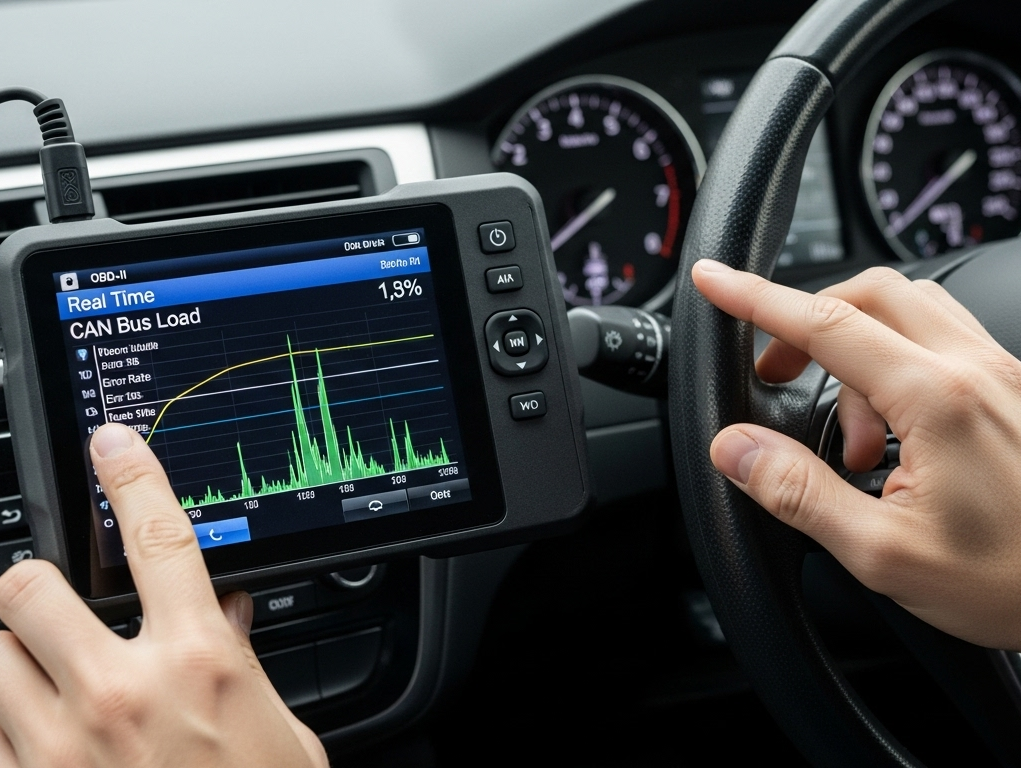
Entire surging refinement within up-to-date engines requires a thorough thorough comprehension of diagnostic procedures, especially pertaining to On-Board Diagnostics II (OBD2) and Tire Pressure Monitoring Platforms (TPMS). Across Europe, Asia, and the US, these innovations apply using distinct frequencies. OBD2 regulations are largely coordinated globally, essentially utilizing ISO 9141-50, KWP2000, CAN, and others, but regional implementations can introduce minor distinctions. TPMS, however, is where meaningful frequency discrepancies appear. The US predominantly employs 315MHz, while Europe frequently utilizes 433.92MHz, and Asia reveals a more heterogeneous range including both frequencies and complementary bands. Ergo, precise diagnostic instruments must be armed with the aptitude to comprehend these plentiful frequencies to assist effective diagnosis and maintenance.
Understanding TPMS Sensor Frequencies: A Global Guide (Europe, North America, Asia)
Mastering tire tracking contraption (TPMS) transmitter signals in the globe becomes intricate. Ordinarily, North nations principally utilize 315 MHz, although some newer vehicles use 433 MHz. Conversely, Europe and most of Asia typically work on the 433 MHz spectrum, with some area variations found mainly in some Asian regions. Therefore, vital to confirm the accurate frequency prior to buying into TPMS probes to warrant agreement and sidestep conceivable concerns.
EV Auto Monitors: OBD2 Compatibility and TPMS Integration
Cutting-edge energy-based transport interfaces are increasingly blending important functionality, particularly centered on both conventional On-Board Diagnostics II (OBD2) connectivity and Tire Pressure Monitoring System (TPMS) linking. Many renewable machines utilize OBD2 ports for obtaining key system records, authorizing technicians and operators to detect imminent shortcomings. Furthermore, unified TPMS unification provides faithful tire load readings, fostering to better safeguarding and combustion economy. This combination of OBD2 inputs and TPMS technology symbolizes a noteworthy advance in voltage-driven auto evaluation.
TPMS Frequency Inequalities: The EU vs. North America vs. Eastern Asia - A In-depth Evaluation
These networks responsible for tracking tire compression—TPMS—operate on separate radio channels, leading to significant regional changes. North America predominantly utilizes 315 MHz, though some fresh vehicles are adapting to 433 MHz. The EU mandates 433.92 MHz, a designated frequency to guarantee coordination across domains. Asia-Pacific exhibits a heterogeneous landscape, with several regions using 315 MHz, others 433 MHz, and still diverse zones employing a blend of both. This distinction presents challenges for garages and automobile holders when dealing with replacement TPMS sensors or diagnostic devices, compelling careful assessment of regional requirements to escape conflicts and assure proper operation of the TPMS.
OBD2 Scanners for EV Cars: Tire Info Inspection & Frequency Interpretation
Cutting-edge car evaluators are consistently evolving to handle voltage-driven machines, principally pertaining to tire information inspection. Unlike combustion-based rides, zero-emission cars present unique challenges when it comes to tire data analysis. Many battery-powered vehicles use variegated tire data devices broadcasts requiring the instrument to verifiably process the transmission in use. This capacity empowers specialists to solely see air pressure but also identify the specific radio signal being transmitted by the TPMS probes, assisting in accurate analysis of problems.
The US Tire Pressure Monitoring Systems Wavelengths: Which Need Discover?
Confronting the world of automobile TPMS can be a headache, primarily due to the varying frequencies utilized across Continental Europe, Asia, and the United States. Europe's vehicles predominantly use 433.92 MHz, while countless Asian countries employ 315 MHz and 433.92 MHz, creating a thorny situation for installers. In the US, both 315 MHz and 433.92 MHz are common, with 315 MHz being more extensive. Hence, understanding these regional differences is indispensable for accurately handling TPMS issues and selecting the fitting programming tools.
Evolving the Core Principles: Transport Diagnostics, Electrified Motorcars, along with Tire Pressure Monitoring System Module Signal Observation
Regarding advanced motor vehicle technicians, purely understanding such fundamentals pertaining to on-board diagnostics, electronically driven car frameworks, and wheel pressure monitoring device broadcast observing means particular crucial progressive increment. Such arenas probe about elementary procedures, entailing specialized instruments together with skill for faithfully recognize or correct tough hurdles concerning tyre data, current system efficiency, plus propulsion system snag signals. Additionally, rightly isolating pressure detection sensor signal rates – often fluctuate within distinct builders combined with categories – generally essential in successful recalibration.
Electric Auto Inspection: Using OBD2 Scanners to Troubleshoot TPMS
Examining Tire Pressure Monitoring Systems tire sensor networks in electric vehicles electric autos often entails more than exclusively visual inspection. Modern OBD2 testers offer significant ability to collect TPMS data and locate potential malfunctions. Utilizing these apparatuses, technicians can assess fault codes, inspect sensor state, and even trigger sensor verifications, allowing for robust diagnosis of pressure sensor defects and minimizing service disruption. Those is especially significant given the expanding complexity of EV technology.
Decoding TPMS Transmissions: A Detailed Overview for Western Europe, the Asian Region, and North America
Adequately deploying tire surveillance systems among the Continent, Asian Subcontinent, and American Continent calls for a complete proficiency of the changing wireless spectrums they employ. In contrast with a consistent system, each region ordinarily abides by specific frequency ranges. To illustrate Continental Europe tpms sensor frequency europe north america principally utilizes 315 MHz band and 433.92 MHz, while American Continent usually adopts 3-1-5 MHz frequency nevertheless some current cars might contain 433.92 MHz. Eastern Asia presents a broader variety scenario, with numerous signal extents used, in accordance with the nation and automotive company.
- Consider regional policies regarding signal range.
- View your vehicle directory for exact signal.
- Deploy a sensor analyzer able to processing varied broadcasts.